Bill’s Commentary:
“On crypto…but this guy believe dollars are “money”. They are not; dollars are IOU promises from a bankrupt entity.”
Bill’s Commentary:
“Gold used as an ATM”
Behind Turkey’s Gold Sales: The Biggest Ever Plunge In Foreign Reserves
Shortly after the Iran war started, with gold unexpectedly tumbling, we showed that the reason behind gold’s paradoxical move – after all, the precious metal has traditionally been a store of value in times of geopolitical stress – was the furious liquidation of gold by emerging markets, in this case Turkey, scrambling to obtain reserve dry powder so Ankara could cover soaring costs of energy imports.

And indeed, the latest central bank data showed that Turkey’s foreign reserves had their biggest monthly decline on record in March, as the Iran war triggered global selloffs in emerging market assets and strained the lira.
Bill’s Commentary:
“JB, this is very good, but one thing he forgot is what’s most important; Gold is real money and as such it cannot default… Bill”
Bill, This leads directly to a US Treasury issues currency. JB –
Macro Liquidity by Sunil Reddy
@Macrobysunil
Gold bonds become inevitable when sovereign debt enters a confidence crisis.
Because the Treasury has a more dangerous problem:
What happens when long-term bonds stop behaving like “risk-free assets” and start trading like duration-heavy risk assets?
At that point, the issue is no longer just yield.
It is trust.
If investors no longer want 20Y or 30Y paper because inflation risk, fiscal risk and rate volatility are too high, the Treasury needs a workaround.
That workaround is gold-linked debt.
Why?
Because gold bonds solve three problems at once:
They reduce duration fear
A normal 30Y bond is just a promise of future dollars.
A gold-linked bond gives the buyer exposure to sovereign credit, but with a hard-asset anchor attached.
That makes long-term debt easier to sell when confidence in fiat duration is weakening.
They create a new collateral layer
The global system is built on Treasuries as pristine collateral.
But when long bonds become volatile and start behaving like risk assets, the collateral base gets questioned.
Gold-linked sovereign paper becomes a bridge:
Sovereign-backed, but not purely dependent on duration.
They bring reserve buyers back
This is the real motive.
Foreign reserve buyers may not want more long-duration Treasuries.
But they may still want US sovereign paper if part of the return is linked to gold instead of future dollars alone.
That is how you keep reserve buyers inside the system without forcing them to hold pure fiat duration risk.
So gold bonds are not about replacing Treasuries.
They are about making long-term debt sellable again when the bond market starts questioning the credibility of fiat duration.
The endgame is gold being used as collateral to keep the paper system alive.
Bill’s Commentary:
“Imagine that, they told us it was the most secure election ever?”
Bill’s Commentary:
“Some very sad math”
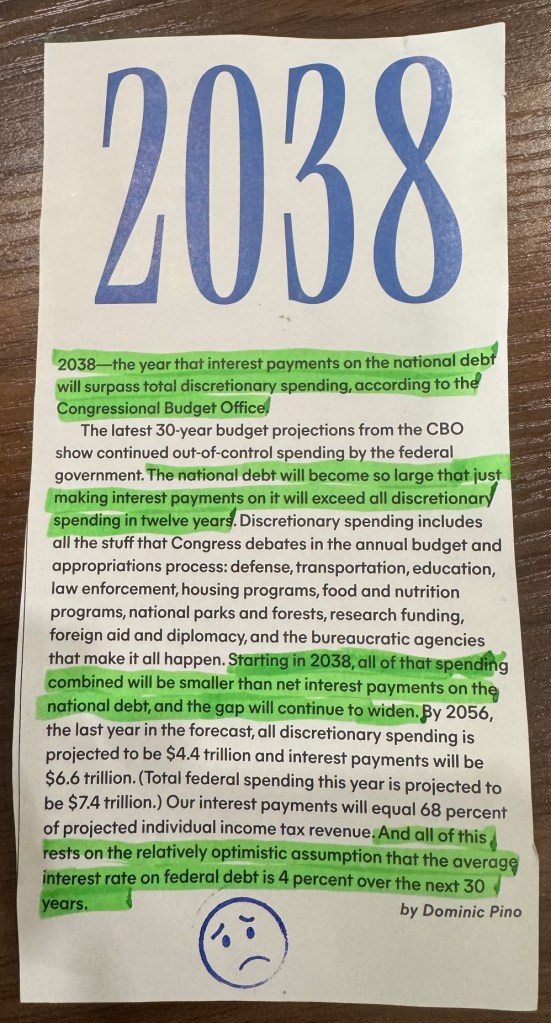
Bill’s Commentary:
“Berkshire Hathaway now sits on $400 billion on cash, by far the highest ever. I’ve spoken of this recently and been chided by people who think either I or Warren Buffet don’t understand the risk of holding paper. I would just say, could they actually buy $400 billion worth of gold? Could the market supply it without failing? Would Berkshire not be “visited” as they surely were back in the early 2000’s regarding his 130 million ounce silver holding (which was promptly liquidated)? Each time Warren Buffet has held very high cash holdings, people called him a dinosaur that did not understand finance…and each time the market eventually cracked at least 40%. This time will be no different with the exception of credit markets, which will also be turned upside down.”
Buffett Cash Hoard: Why $397 Billion Sits On The Sidelines
$397 billion. That’s how much “Buffett cash” now sits on Berkshire Hathaway’s balance sheet after Greg Abel’s first quarter as CEO. Warren Buffett left $373 billion behind when he stepped down at the end of 2025. Three months later, after Abel’s debut earnings report on Saturday, the hoard had grown by another $24 billion. The figure is bigger than the GDP of Hong Kong or Norway. It exceeds the market value of every American corporation except a tiny handful of mega-cap names. And it earned roughly four to five percent in Treasury bills while the S&P 500 ripped through three of its best consecutive years in modern history.
That Buffett cash hoard has also created a lot of speculation, innuendo, and assumptions, which is what I want to walk through in today’s discussion. Primarily, what that cash hoard actually represents, the popular theories explaining it, and what it really costs shareholders to hold.
Bill’s Commentary:
“I thought insider trading was illegal?”
CNBC’s Jim Cramer Left Literally Speechless by Trump’s Personal Stock Trades
CNBC anchor Jim Cramer was left literally speechless on Monday after he was informed that President Donald Trump had been trading stocks in Intel.
During a discussion on CNBC’s Squawk on the Street, Cramer remarked, “You know, the president, U.S. government got in. He could sell it and get that–”
Co-host Carl Quintanilla interrupted, “Yes, and according to the filings, the president’s been trading some Intel in the quarter, yeah.”


Given it takes a kilo of silver per car for the Samsung SDI battery to come out in 2027, tells me silver is gold. Onky silver facilitates a 600 mile range in a smaller more efficient battery without graphine substitutes. Even if the economy crashes, and few can buy new cars, AI data centers and robots are key to our controllers control. They have no issue with replacing pensioners with robots.
LikeLike
Thank you pamelamoves@gmail.com
LikeLike