-
Bill’s Commentary:
“A very good weekend read.”
The Precious Metals Crisis That Could Trigger a Global Financial Reckoning
It ended, apparently, in the spring. Gold ran to a record in the last days of January 2026 — $5,608 an ounce on one spot reading, roughly $5,405 on the LBMA benchmark, and $5,318.40 on COMEX futures, three figures describing the same metal and differing by nearly $300, which is a reminder that the price depends on which price you mean — and then it simply stopped. By the middle of October the metal was changing hands near $4,112, some 27 per cent below the January spot peak, while silver, having briefly touched $121.62 on 29 January, had lost more than half its value and was trading around $56. Two metals, two collapses, and for anyone who had spent three years waiting for the precious metals complex to deflate and stop interrupting the serious business of equity markets, a comfortable conclusion was available: the thing had been a trade, the trade had unwound, and the world could return to its previous arrangements.
The latest from USA Watchdog –
-
Bill’s Commentary:
“Pure unadulterated evil…!”
Why Didn’t Fauci Want Young Men and Pregnant Women to Know the Risks?
On Nov. 15, 2021, Anthony Fauci wrote a decision about COVID-19 booster shots in his private diary.
Push the booster on every adult in America. Do it, he wrote, “no matter what the ACIP says”—that is the Advisory Committee on Immunization Practices, the independent panel of outside experts that votes on who should get which vaccines. The panel had not voted yet.
Do it “despite the fact that there was concern about myocarditis in younger men.” Do it because otherwise, “the message of who should get boosted is ambiguous.”
There is the whole scandal in a single entry. A known risk to young men’s hearts, named by Fauci himself, in the same breath as the decision—and then set aside. Not on the evidence, but because it muddied the message.
The latest from USA Watchdog –
Bill’s Commentary:
“Is this true?”

Bill’s Commentary:
“If the author is only 25% correct, the supply demand situation in silver is a disaster!”
The Silver Institute: A Wonderland of Compounded Errors
Over the last year or so I have sent out many a missive on silver — and the Silver Institute, but I have yet to put it all together in a comprehensive supply and demand balance sheet, and then compare my balance sheet to the one put out by the Silver Institute; so here we go.
Over the years there have been many changes in methodology in their reports; some years photography is included in industry, in others it is not. Solar only became a line item in 2010, for several years before that it was not itemised. I have been very careful to make sure that I am always comparing apples to apples.
Sorry for the length of this essay, but the more apples I turned over, the more rotten ones I found, barrels of them.
Bill’s Commentary:
“W, So, the man believes the only safe place to put money is in IOU’s from an insolvent/bankrupt entity?”
Bill,
I believe Harry may have this backwards.
Look at any chart of stocks, precious metals, commodities, real estate, cars, food prices, etc. and they go from the bottom left to the top right. Always higher. Sure, there are corrections along the way, but the trend is always higher. Our country was built on inflation. I wish I knew this when I was younger.
That $.60 hamburger along with a $.05 cup of coffee in the 1970's will never be seen again in my lifetime. That 3 bedroom cape house on a lagoon at the Jersey Shore that sold for $8,000 will never be seen again. In hindsight, I wish I held onto everything tangible thru the years. My real estate, my cars, my stocks, my gold, etc.
The only sure thing, along with inflation perpetually raising prices, is being guaranteed to lose purchasing power by holding cash. And that would include Treasuries.
Wolf
'I'm selling my main house': Harry Dent warns home prices may not recover for decades By Jeremy SzafronPublished 09:39Updated 09:51
Today he believes the run in markets since March 2009 is "the greatest, longest bubble in history," and that stocks, real estate, gold and silver all inflated together. In his view, the only safe place left is long-term U.S. Treasuries.
https://www.kitco.com/news/article/2026-10-21/im-selling-my-main-house-harry-dent-warns-home-prices-may-not-recoverBill’s Commentary:
“Do you remember when “millions” really meant something?”
OpenAI nears up to $30 billion funding round at $1.25 trillion valuation led by UAE investors
OpenAI is closing in on a funding round that could value the artificial intelligence giant at more than $1 trillion ahead of a potential initial public offering.
The San Francisco-based AI company is raising up to $30 billion at a $1.25 trillion valuation, according to people familiar with the deal, who asked not to be named because the details were confidential. That valuation does not include new capital raised.
Investors from the United Arab Emirates are leading the round alongside Coatue, according to the people. The financing is being positioned as an “opportunistic” bridge ahead of a potential IPO.
Bill’s Commentary:
“Incredibly stupid!”
France Is a Warning to California’s Tax-the-Rich Crowd
French economist Gabriel Zucman has come to California bearing a familiar French solution to a fiscal problem: another tax.
Once based at the University of California, Berkeley, Zucman is back and campaigning for Proposition 40, which would impose an allegedly one-time 5 percent tax on the net worth of Californians worth more than $1 billion. Zucman, who coauthored the proposition, estimates that the tax could raise about $100 billion and claims that 90 percent of the proceeds would go to health care.
The California Legislative Analyst’s office is far more cautious, saying it would raise only “tens of billions” and could cause a long-term loss of income-tax revenue as wealthy people leave the state with the companies they created.
Bill’s Commentary:
“Say it isn’t so!”
Kushner Denies Bombshell Book Claims Of Secret Gulf-Funded Accounts
Jared Kushner is denying explosive allegations that, while serving as a senior White House adviser in Trump’s first term, he had access to secret foreign bank accounts stocked with roughly $2 billion from Gulf royals – and that Dutch intelligence watched him use one of them through his hacked iPhone.
The claims come from an excerpt of investigative journalist Matthew Cole’s forthcoming book Princes and Thieves, published Thursday by Vanity Fair. Cole alleges that Saudi and Emirati money funded a roughly $750 million account in the UAE that Kushner helped manage as an off-the-books foreign policy fund, and that UAE leader Mohamed bin Zayed moved another roughly $1 billion to Israel for Kushner – money a source told Cole was meant for his “personal benefit.”
Cole, a former national security reporter at The Intercept who previously produced investigations for ABC and NBC News, says the reporting took him four years. His book is published by Atria/One Signal, a Simon & Schuster imprint.
October is the month of political surprises. If substantiated, this would be a big one. It’s also sure to provide endless headlines after midterms, if (when) Democrats take the House.
-
Bill’s Commentary:
“Our pal Grizzly checks in, are you ready?”
> Hope you’re well.
> Some thoughts.
> I believe we may be standing at the threshold of a very changing state in our lives.
> Just to provoke some thoughts to motivate folks to redouble their efforts in self reliance by looking at our daily movements under the assumption that the grid is down and what you have is what you have and where you’re at is where you’ll stay.
> Wake up in the morning.
> Coffee? Do you have water? Let’s not buy into the one gallon per person per day calculation. That’s not possible. You’ll need at least 3x that. Do you have beans? Hand grinder?
> Enamel pot or heat safe percolator?
> In regards to heat – how will you cook? Woodstove? Gas burner? Got plenty of wood and more to cut? Gas? Oil?
> Breakfast? Have you stored wheat berries for bread? Hand grinder to make flour? Bread pans? Skillets? Dutch ovens?
> Sanitation – and all that goes along with our human waste requirements A to Z ? Where does that take place to avoid sickness and disease?
> Then off to work – and it won’t be at your current job. It will be gathering wood probably. Hauling water, maybe filtering or purifying by other means, filling kerosene lanterns if you stored some; changing wicks maybe if you bought extra.
> Without becoming overly boring to most, let’s stop there.
> If you have the means and supplies – the water, the cook source, the food, the necessary tools, the knowledge – to make it through breakfast, then you’re probably reasonably prepared to make it through the rest of the day.
> Add in good tough clothing, boots, gloves, buckets, salt, guns/ammo, medicines and bandages, and a good team, then you may make it more than a day.
> So take a few minutes as you think about breakfast and determine if you are prepared enough to get through to lunch.
> Get busy !!
Bill’s Commentary:
“Oh the irony…”
Bill’s Commentary:
“Is this not news because it does not affect you? Coming soon to a theatre near you!”
https://www.yahoo.com/news/world/articles/students-tear-gassed-hit-batons-124656203.html
-
The latest from USA Watchdog –
-
Bill’s Commentary:
“This is significant and a step in the correct direction”
Trump Admin Floats Unfreezing Russian Assets In Big Move To Restart Talks
President Trump appears to be busy rolling back years of entrenched Ukraine policy. Starting last week he announced the controversial diesel deal with Putin, and this week Ukraine’s Zelensky is complaining that intelligence-sharing has been throttled, and possibly even cut off.
The possibility or even likelihood of this heading to another TACO moment aside, what’s next? New reporting in the Financial Times gives an idea. The United States has floated a proposal that European countries unfreeze some of Russia’s sovereign assets and deposit them in an entity controlled by Washington.
The FT report cites four people familiar with the matter, who describe that the idea was formally presented by envoys Steve Witkoff and Jared Kushner during a meeting of Western allies and Ukraine in Miami on Oct.10.
Bill’s Commentary:
“It’s all about credit”
Paul Tudor Jones says 2027 could be a really challenging year for the stock market
Legendary hedge fund manager Paul Tudor Jones told CNBC that next year could be a tough one for the stock market because of increased equity supply from big tech initial public offerings coming down the pipe as well as a potential reckoning from the ballooning U.S. fiscal deficit.
“2027 is going to be really, really challenging for the stock market,” Jones told “Squawk Box” on Tuesday. “You’ve probably got the most negative flow picture for the U.S. stock market that we’ve had, say, since 2002.”
The founder and chief investment officer of Tudor Investment said that corporate buybacks, along with mergers and acquisitions, have been a tail wind for the stock market for most of this four-year bull market as they decreased the equity supply.
Bill’s Commentary:
“Here is some math for you!”
The Most Detailed Explanation Ever Written for $93,683 Gold and $10,409 Silver
The Great American Shell Game: How Washington Plans to Magic Away $41 Trillion
Leave it to Washington to look at a soul-crushing $41 trillion national debt mountain and think: What this really needs is a clever marketing campaign and some crypto bros.
Hand it to the political class for dubbing their latest parlor trick the “GENIUS Act.” It takes real audacity to brand a glorified financial shell game as visionary statesmanship. The plan is simple, or so they would have you believe.
Step one: force payment stablecoin issuers to back their tokens 1:1 with short-term U.S. Treasuries (93 days or less). By buying back volatile long-term bonds and churning out short-term T-bills, the U.S. Treasury creates a captive, non-price-sensitive buyer out of the expanding multi-trillion-dollar digital asset market. Suddenly, global crypto rails become a self-funding engine for the federal deficit. All of us have seen how insane this is just as recently as the past 3 days when blown up data centers wiped out crypto holdings. Pretty strong argument to why gold and silver are not prone to same risk.
-
Bill’s Commentary:
“Pay no attention to the man behind the curtain!”
Tokenization could unleash tens of billions of dollars in trapped capital, Nasdaq CEO says
Tokenization could free up tens of billions of dollars in capital tied up in assets used as collateral across the global financial system, Nasdaq CEO Adena Friedman said.
Tokenizing assets such as Treasurys, equities and money market funds, along with the flow of money, could make collateral more liquid, Friedman told CNBC’s Joanna Ossinger at the TOKEN2049 conference in Singapore.
“If you tokenize all those instruments along with the flow of money, then the collateral becomes very fluid,” Friedman said.
Bill’s Commentary:
“Our pal Brian checks in with a video of interest.”
Hi Bill,
An interesting video. The S&P calculation was off, so I have corrected that in my notes below.
FYI; BrianHow Many Big Macs Does One Ounce of Gold Buy?

- Big Mac Prices given in the video above, in Federal Reserve Debt Notes:
- in the year 2000 = $2.24
- in the year 2026 = $6.12
- This represents a loss in purchasing power of -63%.
- Another way to look at it, is you only get 37% of a single Big Mac with $2.24 today.
- Number of Big Macs purchased per ounce of Gold:
- in the year 2000 = 125
- in the year 2026 = 701 (+461%)
- Number of Big Macs purchased per ounce of Silver:
- in the year 2000 = 2.2
- in the year 2026 = 10.2 (+364%)
- Number of Big Macs purchased per the S&P500:
- in the year 2000 = 656
- in the year 2026 = 1,275 (+94%)
- S&P500 as of 10-13-2026 = 7,805.45. The video above uses a 2026 price for the S&P of 5801.76, which is significantly low, so I am using my own today price for this +94% calculation.
- Number of Big Macs purchased per Barrel of Oil:
- in the year 2000 = 13.4
- in the year 2026 = 15.4 (+15%)
The latest from USA Watchdog – (Also posted under Interviews)
Bill’s latest with Dr. Dave Janda (Also posted under Interviews)
- Big Mac Prices given in the video above, in Federal Reserve Debt Notes:
-
Bill’s Commentary:
“The only thing The Constitution did not address was a national mental health illness…”
The latest from USA Watchdog –
-
The latest from USA Watchdog –
-
Bill’s Commentary:
“Hyperbole?”
Bill,
Looks like we’ve crossed the event horizon in U.S. and global debt.
When something gets sucked into the black hole, we know it takes only a fraction of a millisecond to reach the central singularity.
In my mind, we could go to sleep at night and wake up in the morning without a usable currency.
Wolfgang
GOLDMAN SACHS DROPS DOOMSDAY STATEMENT: U.S. BONDS HAVE NO BUYERS
Goldman Sachs just admitted the long end of U.S. Treasury market is “totally bidless.”
Translation: almost nobody wants the 10- to 30-year debt the U.S. is trying to sell.
No buyers. None. Zero.
https://x.com/SternDrewCrypto/status/2106044033634079186
The latest from USA Watchdog –
-
Bill’s Commentary:
“Did he just tell you they were going to hyperinflate?”
Trump Says Inflation Will Pay Off The $40 Trillion Debt “Very Rapidly”
President Trump thinks ‘certain levels’ of inflation could take care of the $40 trillion national debt.
“You know, inflation. Certain levels of inflation will also pay off that debt very rapidly. Very rapidly,” he told TIME in an interview published Thursday, after the outlet pointed out has grown by about $11 trillion over his five years in office. In response, Trump first blamed Joe Biden, then the Fed, then hinted at a plan he wouldn’t share.
“I know I’m the best in the world,” Trump said. “The best – I don’t want to tell you what those means are, but you can pay off the debt through other means. But the one thing that you can do is pay it off through growth, and we’ve never had growth like this.”
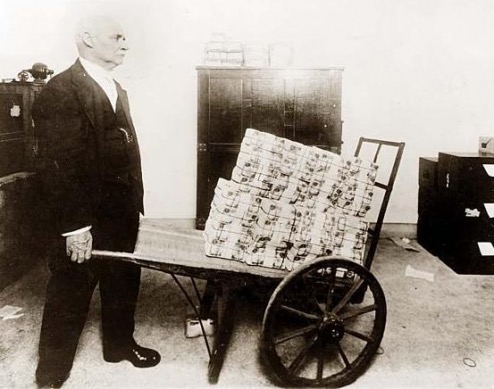
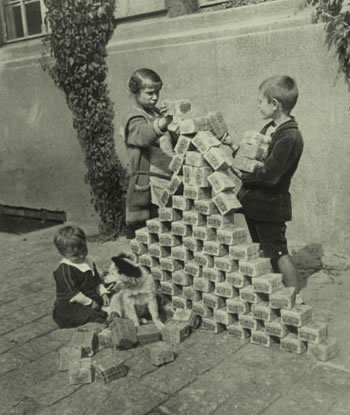
“Re: Ummmm🤔🤔 hyperinflation ???”
Bill’s Commentary:
“I am taking a few days off. I ask, at what interest rate does The Great Unwind begin?”
-
Subscribe
Subscribed
Have a WordPress.com account? Log in now.

