Bill’s Commentary:
“When Amazon betrays your ideology”
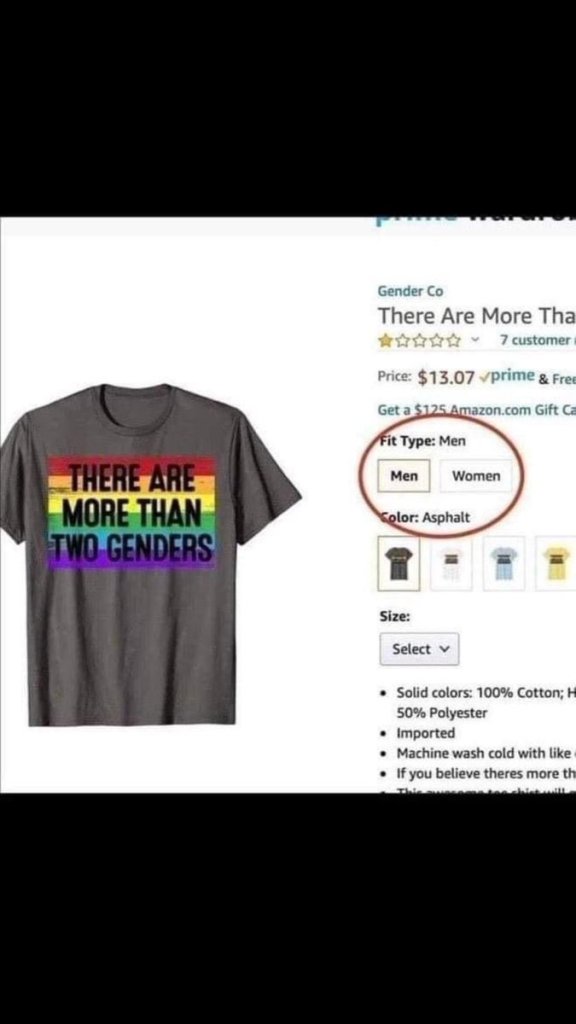
Bill’s Commentary:
“When Amazon betrays your ideology”
What could possibly go wrong? – Dave
According to data from the Office of the Comptroller of the Currency (OCC), the regulator of national banks, as of March 31, 2009, five bank holding companies held $277.57 trillion in derivatives (notional/face amount). At that time, according to the FDIC, there were 8,249 federally-insured commercial banks and savings associations in the U.S. but just five bank holding companies held 95 percent of all derivatives at all U.S. banks. Those financial institutions were: JPMorgan Chase, Bank of America, Goldman Sachs Group, Morgan Stanley and Citigroup.
Bill’s Commentary:
“Back in the day when our leaders had the best interests of their country in mind. Today, government spending is one giant pork belly sliced, diced, and passed out to cronies…”
A recording of a phone call between President Kennedy and General Godfrey McHugh, the Air Force aide to the President. Ever sensitive to public opinion, President Kennedy was horrified to open the paper one day and see a photograph of a navy aide standing next to an expensive new naval project — a hospital bedroom that had been built at a base on Cape Cod, to be ready in case Jacqueline Kennedy went into labor with their son, Patrick Bouvier Kennedy. Such an expenditure seems modest today, but Kennedy was irate at the cost and, even worse, the publicity involved. This recording is a part of “Listening In, The Secret White House Recordings of President Kennedy,” available in stores now.
Bill’s Commentary:
“Tucker goes to a grocery store in Moscow. He speaks some hard truths at the end.”
“All good stuff, but unfortunately a couple of decades too late…”
Here’s Why Trends in Federal Spending Raise Fears for Economy
Both chambers of Congress are locked in fierce battles over spending legislation.
A “supplemental” package has found bipartisan support in the Senate after the removal of flawed border and immigration provisions. However, its $95 billion price tag—$60 billion of which would go to Ukraine—means there will be stiff resistance in the House.
Bill’s Commentary:
Only wait for it about 12 seconds or so ... “It’s a great business to be in, Central Banking, where you print money and people believe it.” – Adrian Orr, Governor of the Reserve Bank of New Zealand
Bill’s Commentary:
“Can “confidence” in money continue when the overlords of that money do what they do and get caught?”
DERBY: Thank you for taking my question. You noted earlier in the press conference that you weren’t aware of the trading activity of the Boston and Dallas Fed Bank presidents. As you know, those, all 12 regional Fed Bank presidents, just went through the renomination process earlier this year. And Governor Brainard described it as a rigorous process at the time. So I want to know, did anybody know—did anybody at the Board level know about the stock trading activity? And, going forward, do you still have confidence in the Dallas and Boston Fed Bank presidents to do their job?
POWELL: So these, I don’t need to tell you, we file, people file these reports annually. And I think they were just quite recently filed for 2020. So I don’t have any reason to think people at the Board would have known about particular trading that’s going on. They will see that—there are people at the Fed who see the, you know, see the trading reports when they’re, you know, when they’re annually filed. You know, in terms of having confidence and that sort of thing, I think no one is happy, no one on the FOMC is happy to be in this situation, to be having these questions raised. It’s something we take very, very seriously. This is an important moment for the Fed, and I’m determined that we will rise to the moment and handle it in ways that will stand up over time. I’m very reluctant to get ahead of the process and speculate, though, about different things. And, you know, when we have things to announce, we’ll go ahead and do that, but that’s really what I have for today.
Torres was explaining to Powell that there is no reason for the dates of Kaplan’s trades to be withheld from the public because of any ongoing investigation because that information, per the Fed’s disclosure rules, was previously legally owed to the American people and Kaplan didn’t provide it as legally required. When Kaplan made his multiple “over $1 million” trades in bets on which way the stock market would move using S&P 500 futures – during the year of 2020 when he was both sitting as a voting member of the Fed’s FOMC as well as making market-moving comments himself to the media – he was legally obligated to report the dates of each individual buy and sell on the form provided to him by the Dallas Fed. Every other regional Fed Bank President listed the dates of the buys and sells. But Kaplan simply wrote the word “multiple” where the date was required. (See Kaplan’s financial disclosure forms from 2015 through 2020 here.)
By eliminating the dates from his financial disclosure forms, it was impossible to see if Kaplan was trading during Fed blackout periods and if he was shorting the market and then the dates when he covered his shorts.
A Gallup poll released in May of last year found that just 36 percent of those Americans surveyed said they had either a “great deal” or a “fair amount” of confidence in Fed Chair Powell. Clearly, Michelle Smith’s endeavors to colonize the minds of a free press are not working out as planned.
February 7, 2024
Bill’s Commentary:
“You do realize when you read mainstream news like this that you are being softened up for an attack on Iran? Bombs away and may God have mercy on us all!”
February 7, 2024
Bill’s Commentary:
What a surprise, the Secretary of the Treasury does not understand Economics 101 …much less the role “money” has within the real economy and financial markets!
 BillHolter.com